ShopDreamUp AI ArtDreamUp

Deviation Actions




Description
Full view for maximum effect.
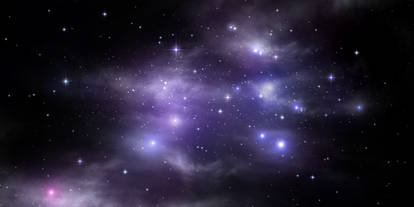
The Pleiades (M45) in Taurus
The Pleiades (Seven Sisters in Greek mythology) are the most famous of all the open star clusters. Approximately 500 stars adorn the black velvet sky. This first magnitude cluster is quite young and is easily visible to the naked eye. It somewhat resembles a smaller version of the Big Dipper. At least 6 hot blue stars are readily visible; those with trained eyes can see more.
Because of its large diameter (2 degrees), M45 is best seen in binoculars, or through a medium focal length telescope. A faint veil of nebulosity surrounds the brighest stars in the Pleiades, with the most easily seen patch being the Merope Nebula (IC 349), which surrounds the star Merope.
These reflection nebulae are not remnants of the gas cloud where the Pleiades were born, rather, they are just passing through interstellar dust and cloud.
The major stars which comprise the Pleiades have some beautiful names (Seven Sisters); Maia, Taygeta, Merope, Alcyone, Electra, Asterope and Celaeno.
In some ancient cultures, people would engage in ceremonies to honour the dead when the Pleiades had reached the highest point in the sky at midnight. Ancient Aztecs believed the Pleiades would be overhead at midnight the day the world would end.
This composite consists of one set of images; one set of 15 images taken at ISO-800.
Each individual image was a 240 second exposure.
IRIS was used to calibrate each image (dark subtraction [median combined master dark] and flat field division [median combined master flat {lights and darks}]), to register, align, and finally stack.
Photoshop CS2 was used to adjust levels, curves, saturation, colour balance, noise reduction, frame and resize the final composite.
Target: The Pleiades (M45) in Taurus
Date: Sunday, October 22nd, 2006
Time: First image: 02:45 AM
Time: Last image: 04:08 AM
Location: Coonabarabran, NSW, Australia
Camera: Canon EOS-350D
Telescope: Saxon ED80
Focal length: 600mm
Mount: Piggy-backed onto an 8" Meade LX90 LNT (F/10)
Autoguided: Through 8" Meade LX90 LNT (F/10)
Guider: Meade DSI-C
Alignment: Equatorial; via equatorial wedge
Exposure: 15 x 240 seconds @ ISO-800 (RAW)
Software: IRIS: Calibration, registration, stacking; Adobe Photoshop CS2: post-processing and framing
The Pleiades (M45) in Taurus
The Pleiades (Seven Sisters in Greek mythology) are the most famous of all the open star clusters. Approximately 500 stars adorn the black velvet sky. This first magnitude cluster is quite young and is easily visible to the naked eye. It somewhat resembles a smaller version of the Big Dipper. At least 6 hot blue stars are readily visible; those with trained eyes can see more.
Because of its large diameter (2 degrees), M45 is best seen in binoculars, or through a medium focal length telescope. A faint veil of nebulosity surrounds the brighest stars in the Pleiades, with the most easily seen patch being the Merope Nebula (IC 349), which surrounds the star Merope.
These reflection nebulae are not remnants of the gas cloud where the Pleiades were born, rather, they are just passing through interstellar dust and cloud.
The major stars which comprise the Pleiades have some beautiful names (Seven Sisters); Maia, Taygeta, Merope, Alcyone, Electra, Asterope and Celaeno.
In some ancient cultures, people would engage in ceremonies to honour the dead when the Pleiades had reached the highest point in the sky at midnight. Ancient Aztecs believed the Pleiades would be overhead at midnight the day the world would end.
This composite consists of one set of images; one set of 15 images taken at ISO-800.
Each individual image was a 240 second exposure.
IRIS was used to calibrate each image (dark subtraction [median combined master dark] and flat field division [median combined master flat {lights and darks}]), to register, align, and finally stack.
Photoshop CS2 was used to adjust levels, curves, saturation, colour balance, noise reduction, frame and resize the final composite.
Target: The Pleiades (M45) in Taurus
Date: Sunday, October 22nd, 2006
Time: First image: 02:45 AM
Time: Last image: 04:08 AM
Location: Coonabarabran, NSW, Australia
Camera: Canon EOS-350D
Telescope: Saxon ED80
Focal length: 600mm
Mount: Piggy-backed onto an 8" Meade LX90 LNT (F/10)
Autoguided: Through 8" Meade LX90 LNT (F/10)
Guider: Meade DSI-C
Alignment: Equatorial; via equatorial wedge
Exposure: 15 x 240 seconds @ ISO-800 (RAW)
Software: IRIS: Calibration, registration, stacking; Adobe Photoshop CS2: post-processing and framing
Image size
1280x853px 1.09 MB
© 2006 - 2024 octane2
Comments180
Join the community to add your comment. Already a deviant? Log In

Beautiful, one of my sisters is named after the star Maia. Thank You